Mineral Salts
نمک ساب | فلفل ساب | 2 طرفه
2,157,000 Toman
≈ $24.0 USD


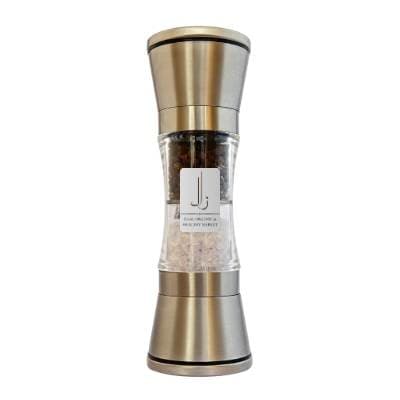
Zaal Market kitchen tools are designed to bring out the aroma of mineral salt crystals and whole spices. Our ceramic spice grinder has a glass body and a wear-resistant ceramic blade that grinds the hardest rock salt and black pepper quickly and hygienically, with no risk of rust. The grind is adjustable, and the clear glass looks good on the table and next to the stove.
Coarse mineral salt and whole black peppercorns need an efficient, durable tool to grind them at the moment of use. Rock salt crystals such as pink salt, blue salt and delnamak are very hard; cheap grinders with plastic gears or ordinary metal blades soon wear, chip or rust next to salt. Zaal Market offers a two-sided glass grinder with a compressed ceramic core, so a ceramic spice grinder releases the taste of natural crystals cleanly.
These kitchen tools are for serving food; they are not a substitute for medicine or medical advice.
| Feature | Zaal two-sided glass grinder | Ordinary plastic or metal grinder |
|---|---|---|
| Blade | Compressed, unbreakable aluminium oxide ceramic | Ordinary steel or hard plastic |
| Resistance to salt | Does not rust or oxidize | Metal blade may rust from salt moisture |
| Design | Two separate compartments in one body | One compartment |
| Grind setting | Turning screw, from very fine powder to coarse | Fixed or hard to adjust |
| Body | Thick, clear, odorless glass | Plastic that scratches and turns cloudy |
The dual 2-in-1 salt and pepper grinder has a clear glass body with two separate sections, top and bottom. Fill one with pink or blue rock salt and the other with black peppercorns, and grind both seasonings with one handy tool at the table or by the stove. For refills, see the Persian salt grinder set 1100g or the bags of Persian pink rock salt 1kg.
The glass body can be washed with water and dish soap. Do not soak the ceramic mechanism in water for long; simply clean it with a small dry brush or cloth. If the grinder becomes slow, grind a little dry, raw rice: the rice absorbs moisture and spice residue and cleans the ceramic blades.
Buyers abroad can send an inquiry through our international order page.
Salt is corrosive and over time oxidizes even stainless steel, while a ceramic blade does not rust in salt and moisture and does not change the aroma of spices.
Yes. A screw on the top lets you set the grind from a very fine powder for a salt shaker to coarse grains for steak and kebab.
Each compartment holds about 100 to 150 g of crushed rock salt or black peppercorns, enough for several weeks of family use.
Grind a few grains of dry raw rice. The rice removes moisture and spice dust without the need to wash the mechanism in water.